Education InternationalElevating and Amplifying the Voices of Afghan Teachers on the Global Stage
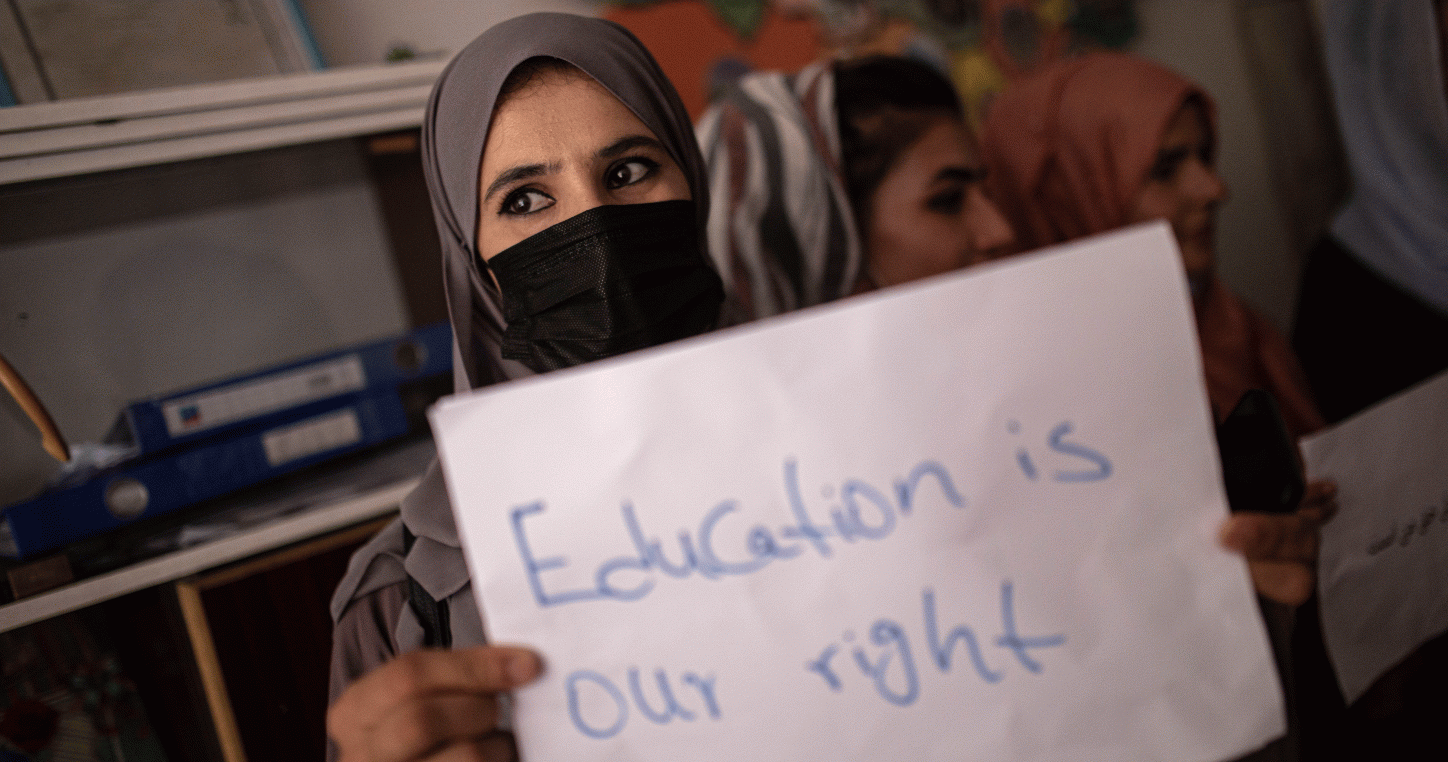
The Education International Afghan Teachers' Rights Observatory is a vital tool to shed light on the Taliban's repressive actions. It provides critical, real-time insights into abuses of teachers' rights and the wider climate of fear surrounding girls' education.
Zia Yousafzai, Malala Fund
We salute teachers and their unions in these harsh circumstances, for their resilience, bravery and determination to continue to fight for the right to education in Afghanistan, especially for girls. We salute those teachers, both men and women, who continue to advocate for girls' and women's rights, despite the risks to their own lives. Their actions are inspirational!
Situation in Afghanistan
The Situation in Afghanistan
Afghanistan is going through a humanitarian catastrophe following the Taliban’s seizing of power on 15th August 2021. The financial freeze, the ban on schools, the closure of the borders, and continuous tackling and tracking of teachers, activists and human rights’ defenders in the country, has forced many to flee their beloved land for better living conditions and a peaceful future.
Education International (EI) is the Global Union Federation that brings together organisations of teachers and other education employees from across the world. Through our 383 (check if this number has changed) member organisations, we represent more than 32 million teachers and education support personnel in 178 countries and territories. (need to get most up to date data from Duncan Smith)
Farzaneh, a female teacher in a girls’ school for over 20 years in Samangan
Witnessing the eagerness of my students to learn when I am at school is truly rewarding. The girls show remarkable enthusiasm and interest in their lessons. It is truly disheartening that their opportunity to learn is being squashed. It is a great shame.
Shahira, a female teacher for 3 years in a secondary school in Balkh
Teachers should have the right to join a professional association or education union and the union should have a legal right to negotiate on behalf of teachers on all professional matters, on professional autonomy and freedom.
Anonymous, female secondary school teacher, union, and women’s rights activist
I am a former provincial leader of the National Teachers’ Elected Council. At the same time, I have been a women’s rights activist for a long time, advocating for girls’ education and participation of women in different organizations. Due to my engagement with teachers’ union and women’s rights activism, I was one of the most well-known people in my city which put me in imminent danger.
Zahra, a female teacher in a secondary girls’ school in Nangarhar
High officials impose significant restrictions on us. Female teachers in particular have no personal freedoms. Sometimes I doubt whether our profession is respected.
Seyed, a male teacher for over 20 years in a secondary boys’ school in Herat
I was happy when I was teaching the upper classes, but I have now been at home for the past two years. I firmly believe that girls should have the right to education and female teachers should be allowed to teach boys.
Mawlana, a male teacher for 3 years in a secondary boys’ school in Samangan
In recent months, the situation has not been easy. What gives me energy is seeing how important education is for Afghan citizens. I am totally in favour of girls being able to go to school and women being able to teach like men. I am a member of a trade union and I see what they do to defend teachers like me.
I remember when I became a teacher, I realized the decency of this job, I realized that my path in this life had been destined since childhood. I realized the love and affection and the passion that flowed from nowhere in my being and unknowingly came to me every day.
Abdul, a male teacher for 15 years in a boys’ school in Balkh
I am proud of being a teacher because we have a sacred duty, but we are not considered with respect. I am also very angry that the girls' schools have been closed, as I firmly believe in every girl's right to education.
Afghanistan : Humanitarian Relief for Teachers Affected by the Earthquake in Kunar
2025-11-14
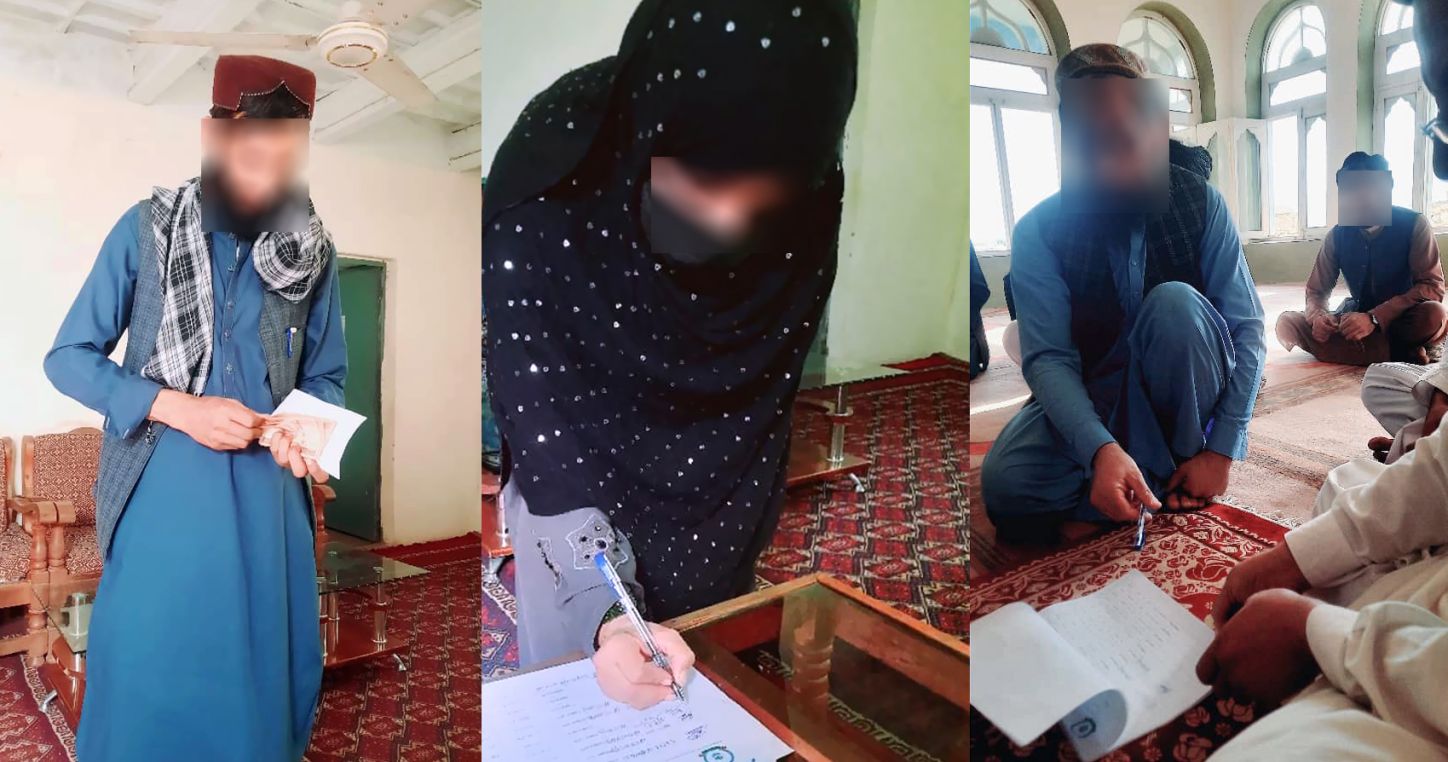
On 31 August 2025, a magnitude 6.0 earthquake struck Kunar Province in eastern Afghanistan. The tremor caused catastrophic damage killing more than 2,500 people, injuring thousands, and destroying homes, as well as many schools.
In this context of devastation, Education International (EI) and its affiliate, the National Teachers Elected Council (NTEC), mobilized quickly to provide humanitarian assistance to unionized teachers affected by the disaster. This initiative illustrates the solidarity and commitment of the global education community through EI.
Afghanistan: Survey provides meaningful insights into the experiences of teachers and students under the Taliban regime
2024-03-25
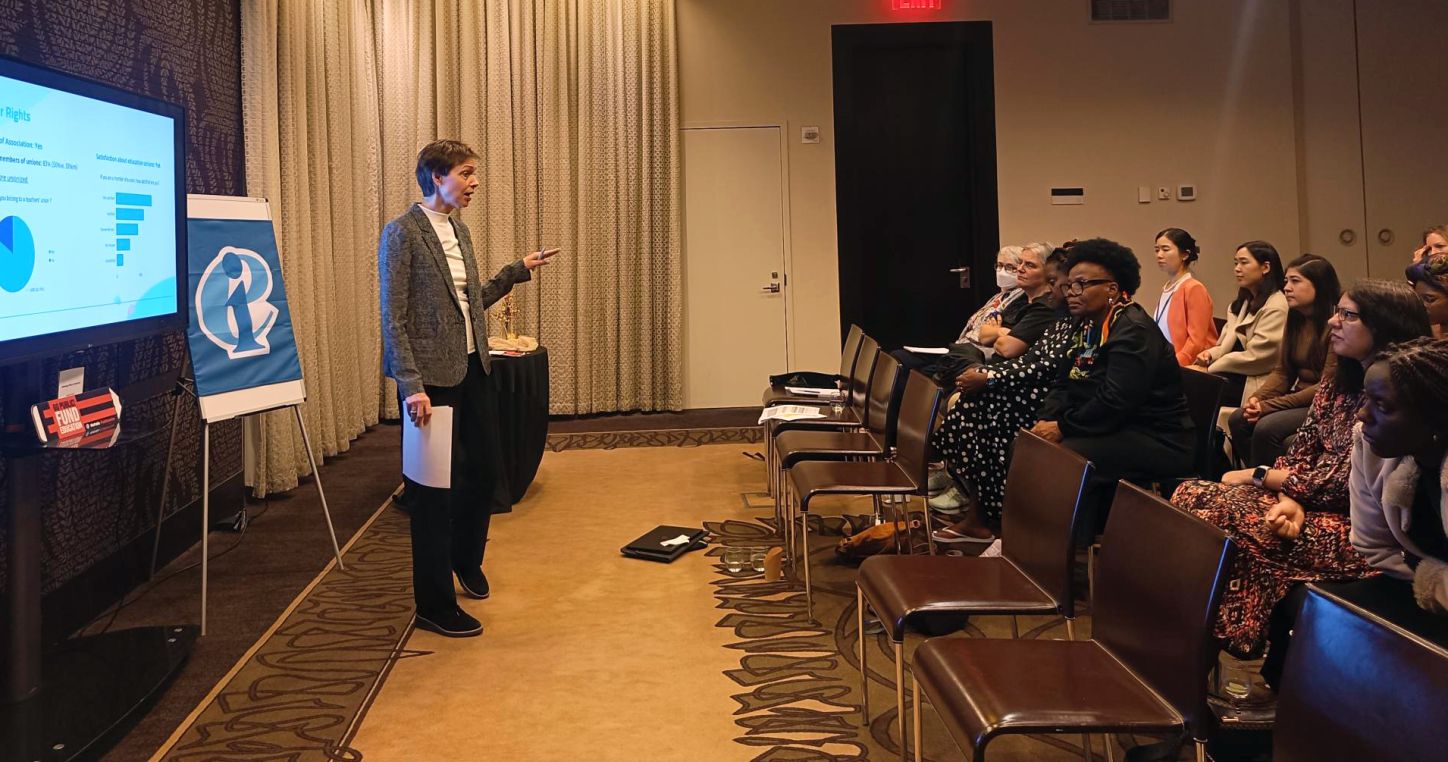
Education International (EI) hosted a union side event at the 68th session of the United Nations Commission on the Status of Women (UNCSW) to highlight the plight of girls and women teachers in Afghanistan who have been forbidden from going to school and teaching since the Taliban takeover in 2021.